


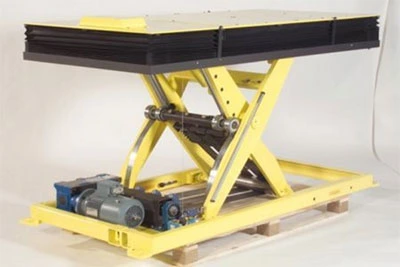
Scissor lift tables are widely used across industrial environments to raise, lower and position loads safely and efficiently. However, not every application has the same requirements. Load capacity, lifting speed, positioning, operating environment and frequency of use can all influence which lifting system is most appropriate.
For applications where quiet operation, smooth movement, precision and low maintenance requirements are particularly important, belt-driven scissor lifts can provide an effective solution.
Understanding where belt-driven technology offers the greatest advantages can help businesses select a lifting solution suited to their production process and working environment.
How Do Belt-Driven Scissor Lifts Work?
A belt-driven scissor lift uses a mechanical drive system rather than hydraulic cylinders. Depending on the design, an electric motor works with belts and mechanical components to actuate the scissor mechanism, raising or lowering the platform.
Unlike a conventional hydraulic lift system, the lifting mechanism can operate without hydraulic oil. This can be beneficial where cleanliness is important or the potential for hydraulic fluid leakage needs to be minimised.
The belt-drive system can also provide smooth, precise movement and quiet operation, making these lifts suitable for a range of industrial, commercial and logistics environments.
When Are Belt-Driven Scissor Lifts Suitable?
Choosing the correct drive system depends on how the lift will be used. Belt-driven scissor lifts can be particularly suitable when lifting forms part of a wider production or material handling process.
Clean or Sensitive Environments
The oil-free nature of a belt-driven system can make it an attractive option where hydraulic oil would be undesirable. Intraboss also identifies belt-driven scissor lifts as suitable for low-dust and clean environments, including laboratories and food processing facilities.
For applications with demanding hygiene or corrosion-resistance requirements, stainless steel lifting equipment may also provide an appropriate solution.
Repetitive Lifting Operations
Production lines and other industrial processes can require loads to be raised and lowered repeatedly throughout the working day.
Duty cycle, lifting speed and operational requirements therefore become important considerations. Belt-driven scissor lifts can provide smooth and repeated lifting and lowering, making them suitable for applications such as production lines and material handling processes.
The required number of cycles should form part of the initial specification rather than assuming one drive system will suit every repetitive application.
Controlled Movement and Positioning
Some applications require more than moving a load between fully lowered and raised positions. Components or goods may need to stop at predetermined working heights, align with other equipment or move through a process in a controlled manner.
The belt-drive system provides smooth and precise movement when lifting and lowering. Speed settings can also be customised for different applications, allowing the lift to be designed around the requirements of the wider process.

Load and Lifting Requirements
Before selecting any scissor lift table or belt-driven scissor lift, it is essential to understand exactly what the system needs to lift.
Engineers may need to consider:
- Load weight, dimensions and shape
- Weight distribution across the platform
- Required lifting height
- Platform dimensions
- Lifting and lowering speed
- Number of operating cycles
- Loading and unloading method
The appropriate configuration depends on the application. Intraboss belt-driven scissor lifts can be customised around factors such as platform size, lifting capacity and speed settings.
An unusually shaped or unevenly distributed load may require a different configuration from a compact load of the same weight. The complete handling process should therefore be considered rather than maximum capacity alone.
Positioning Accuracy and Control
Positioning requirements are particularly important where scissor lifts interact with machinery, conveyors, production lines or other material handling equipment.
Belt-driven scissor lifts are designed to provide smooth and precise lifting and lowering. Where specific speeds, platform dimensions or capacities are required, these factors can be considered as part of a tailored configuration.
Where lifting forms part of the wider movement of goods through a facility, the lifting solution should be considered alongside the surrounding material handling process and equipment.
Maintenance and Operational Considerations
Maintenance requirements should be considered when selecting any industrial lifting system. Belt-driven scissor lifts can offer relatively low maintenance requirements compared with some traditional lift systems, which can help reduce operational demands.
The working environment should still form part of the specification. Factors such as operating frequency, load requirements and the conditions in which the equipment will be installed can influence the most appropriate configuration.
Safety and Limitations of Belt-Driven Scissor Lifts
Like any industrial lifting system, belt-driven scissor lifts need to be specified around the load, operating environment and intended use. Appropriate controls and safety measures should form part of the complete lifting solution, particularly where operators work close to moving equipment.
The drive system should also be considered as part of ongoing inspection and maintenance. Although belt-driven systems can offer low maintenance requirements, the equipment still needs to be maintained appropriately throughout its working life.
Belt-driven technology is not necessarily the right solution for every application. Load capacity, lifting height, operating speed, positioning requirements and environmental conditions should all be assessed when selecting a lifting system. Depending on the application, a hydraulic, spindle-driven or other lifting solution may be more appropriate.
The lifting technology should ultimately be selected around the application rather than specified solely for the advantages of a particular drive system.
When Is a Bespoke Scissor Lift Required?
Standard lifting equipment can be suitable for straightforward applications, but industrial processes often introduce requirements that cannot be addressed effectively by an off-the-shelf system.
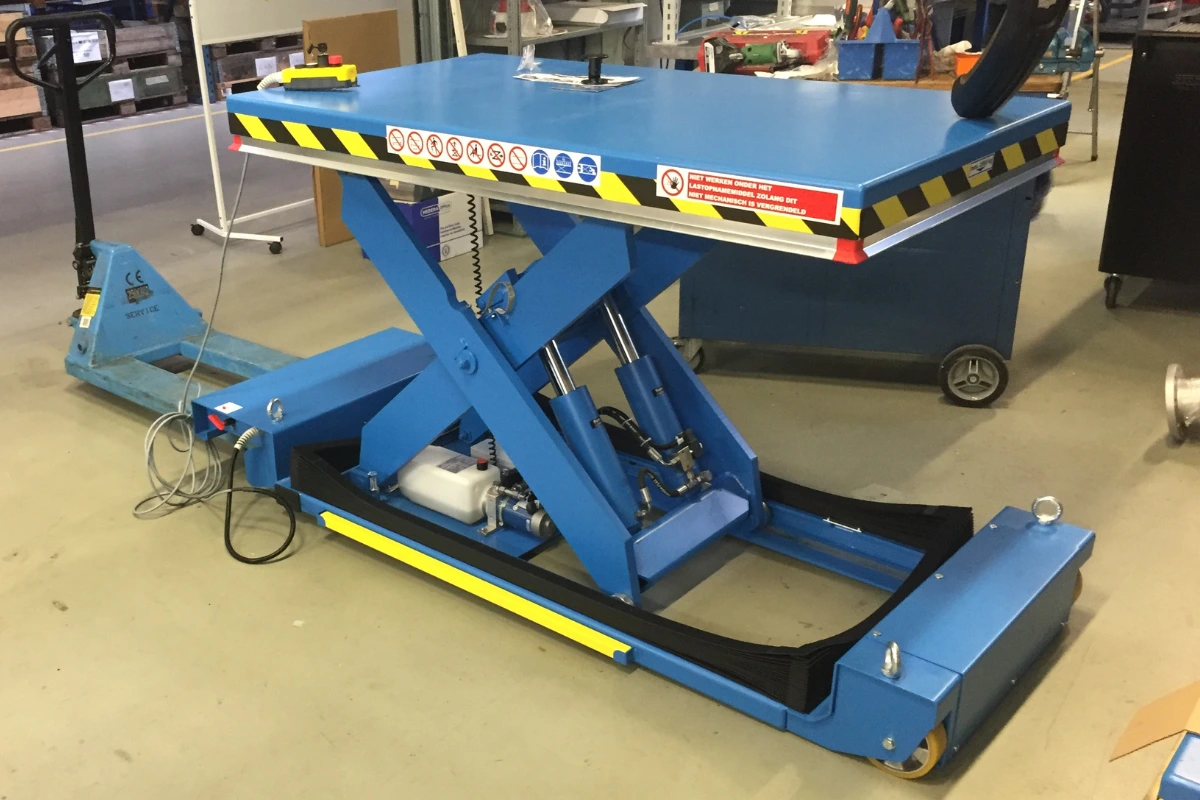
A bespoke scissor lift may be appropriate for unusual load dimensions, restricted installation space, specific platform sizes or lifting heights, or integration with existing production equipment. Intraboss belt-driven scissor lifts can also be customised for factors including platform size, lifting capacity, speed settings and material selection.
Rather than adapting a production process around standard equipment, a bespoke system allows the lifting solution to be designed around the process itself.
Choosing the Right Scissor Lift for Your Application
There is no single drive system that is right for every lifting operation.
Belt-driven scissor lifts can be particularly effective where quiet operation, smooth movement, precision and low maintenance requirements are important. However, load characteristics, lifting height, operating frequency, environmental conditions and integration requirements should all be assessed before deciding on the final configuration.
Intraboss provides bespoke lifting and material handling solutions designed around individual operational requirements. By considering the complete application from the outset, a lifting system can support safe, efficient and reliable material handling.
Need a lifting solution designed around your application?